



PLOS Currents Disasters

  • Log in
  • Home
  • Aims & Scope
  • Review Board
    • Reviewer Guide
  • Authors ↓
    • Author Guide
    • Figure Creation
    • Table Creation
    • Equation Creation
    • Reference Creation
    • PLOS Currents FAQ
  • Resources
  • About
    • Guidelines for Comments

PLOS Currents: Disasters

●  Peer-Reviewed by distinguished researchers  ●  Open Access and freely available to all  ●  Open Data Compliant ●  Archived in PubMed Central  ●  Indexed in PubMed & Scopus  ●  No Publication Fee

PLOS Currents Disasters

PLOS Currents Disasters is an innovative open-access publication for the rapid communication of new research results and operational analyses derived from the study or management of all types of disasters. Read more at the PLOS Medicine blog.  

About PLOS Currents Disasters

PLOS Currents Disasters aims to minimize the delay between the generation and publication of new research results and operational analyses derived from the study or management of all types of disasters — natural or manmade, local, regional or global. The content is peer-reviewed, citable, publicly archived in PubMed Central, as well as being indexed in Scopus and PubMed.

PLOS Currents Goals

PLOS Currents is a publication channel that aims to address four facets of scholarly research communications: 1) Decrease publishing time with a streamlined review and production process. 2) Focus: Publish research within a focused research community. 3) Flexibility: Unlock rigid article formats to reflect diversity and broaden forms of research disseminated. 4) Revisions: Free the static research article with revisions that document research in progress.

PLOS Currents Archive and Indexing

All PLOS Currents articles are publicly archived in PubMed Central and indexed in Scopus and PubMed.

The Theory of Planned Behavior and Disaster Preparedness

September 6, 2017 · Research Article

Introduction: Disaster preparedness is defined as actions that ensure resources necessary to carry out an effective response are available before a disaster. Disaster preparedness requires a thorough understanding of the factors that influence performance or nonperformance of disaster preparedness behaviors (DPB). The major aim of this research was to further our understanding of DPB based on the theory of planned behavior (TPB).

Method: This was a cross-sectional study of factors determining of DPB in a representative sample of 1233 Tehran inhabitants. Measures derived from the TPB were obtained in the unprepared and prepared people.

Results: Consistent with the theory, intentions to do DPB could the person predicted from attitudes, subjective norms, and perceived behavioral control with respect to DPB; and actually doing DPB was strongly related to intentions and perceptions of control assessed in the prepared people. Theoretical and practical implications of these findings are discussed.

Conclusion: An effective intervention will not only have to encourage people of the desirability of DPB, but also to provide them with the skills and means to do it. The more strongly they can be made to feel that they have control over DPB, the more likely they are to carry out their intentions. That is, heightened perceived control tends to strengthen people’s motivation to do DPB.

Key words: theory of planned behavior; disaster;  preparedness  
The Enduring Health Challenges of Afghan Immigrants and Refugees in Iran: A Systematic Review

July 21, 2017 · Review

Introduction

Iran is the third country in the world with the highest number of registered refugees with the majority coming from Afghanistan. They suffer major health and social risks yet their health status has never been comprehensively determined.

Methods

This systematic review of the literature highlights major disparities among documented immigrants in health access, communicable and non-communicable diseases and the increasingly desperate plight of undocumented immigrants.

Results

Comparing with Iranian population, the findings suggest the higher prevalence of most diseases among Afghan immigrants and refugees. This highlights the importance of increasing the migrants’ access to health services from both public health as well as human rights perspectives.

Discussion

Although the Iranian government has taken new initiatives to overcome this challenge, certain issues have still remained unaddressed. Potential solutions to improve this process are discussed.

Interventions for Prevention of Intimate Partner Violence Against Women in Humanitarian Settings: A Protocol for a Systematic Review

July 12, 2017 · Disasters

Introduction: Humanitarian emergencies and the number of people who are adversely affected are increasing. In such emergencies, the vulnerability of women and girls to gender-based violence increases signifi­cantly and they often experience high levels of intimate partner violence (IPV). There are a limited number of interventions to reduce gender-based violence (GBV) and IPV in the contexts of humanitarian emergencies, and there is uncertainty about the effectiveness of these preventive interventions. This is the protocol for a systematic review that will synthesize the evidence on interventions for primary or secondary prevention of IPV in humanitarian settings, and assess the effect of existing types of IPV-related interventions in these settings.

Methods and Design: The PRISMA-P 2015 statement has been used to prepare this report. Studies published from January 2000 to January 2017 will be reviewed with no language limits. Any experimental, quasi-experimental, or controlled trials will be included. A combination of four key concepts, including “IPV” AND “population” AND “humanitarian setting” AND “intervention” will be used in the search and a variety of information sources will be used: (1) bibliographic databases; (2) special databases and grey literature; (3) and the reference lists of eligible studies. Two reviewers will independently screen articles, extract relevant data and assess study quality. Discrepancies will be resolved through consensus. Risk of bias will be assessed using the Cochrane Risk of Bias tool and the quality of evidence will be assessed using the CONSORT checklist. A narrative synthesis will be provided. If a sufficient number of studies are found, their results will be pooled using a random-effects meta-analysis. For dichotomous outcomes, summaries of intervention effects for each study will be provided by calculating risk ratios with 95% confidence interval. Standardized mean differences will be used for continuous outcomes.

Discussion: The review will be useful for IPV management policy and related planning. It will help researchers, policymakers and guideline developers with an interest in reducing violence against women among refugees, internally displaced persons (IDPs), and conflict-affected population.

Correction: A Comparative Analysis of Disaster Risk, Vulnerability and Resilience Composite Indicators

June 29, 2017 · Correction

Correction The links for Annex 1 and Annex 2 are incorrect. The correct links are provided here. Annex 1 – LIST OF METHODS ANALYSED Link to external file Annex 2 – EXCLUDED METHODS Link to external file References Beccari B. A Comparative Analysis of Disaster Risk, Vulnerability and Resilience Composite Indicators. PLOS Currents Disasters. 2016 […]

Pilot Testing and Implementation of a mHealth tool for Non-communicable Diseases in a Humanitarian Setting

June 5, 2017 · Research Article

Introduction. Given the protracted nature of the crisis in Syria, national and international assistance agencies face immense challenges in providing for the needs of refugees and the host Lebanese due to the high burden of noncommunicable diseases (NCDs) among both populations. These are complex conditions to manage, and the resources for refugee care limited, having dramatic implications for Lebanon’s health system.

Methods. A longitudinal cohort study was implemented from January 2015 through August 2016 to evaluate the effectiveness of treatment guidelines and an mHealth application on quality of care and health outcomes for patients in primary health care facilities in Lebanon serving Syrian refugees and host communities.

Results. Overall, reporting in clinic medical records remained low, however, during the mHealth phase recording of BMI and blood pressure were significantly greater in the mHealth application as compared to clinic medical records. Patient exit interviews reported a much more frequent measurement of weight, height, blood pressure, and blood glucose, suggesting these may be assessed more often than they are recorded. Satisfaction with the clinic visit improved significantly during implementation of the mHealth application as compared to both baseline and guidelines implementation in all measures. Despite positive changes, provider uptake of the application was low; patients indicated that the mHealth application was used in a minority (21.7%) of consultations. Provider perspectives on how the application changed patient interactions were mixed.

Discussion. Similar to previous evidence, this study further demonstrates the need to incorporate new interventions with existing practices and reporting requirements to minimize duplication of efforts and, consequently, strengthen provider usage. Additional research is needed to identify organizational and provider-side factors associated with uptake of similar applications, particularly in complex settings, to optimize the benefit of such tools.

In the Field Feasibility of a Simple Method to Check for Radioactivity in Commodities and in the Environment

May 30, 2017 · Disasters
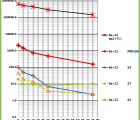
Na-22_DevicesVsDistance05

Introduction: Some release of radionuclides into the environment can be expected from the growing number of nuclear plants, either in or out of service. The citizen and the big organization could be both interested in simple and innovative methods for checking the radiological safety of their environment and of commodities, starting from foods.

Methods: In this work three methods to detect radioactivity are briefly compared  focusing on the most recent, which converts a smartphone into a radiation counter.

Results: The results of a simple sensitivity test are presented showing the measure of the activity of reference sources put at different distances from each sensor.

Discussion: The three methods are discussed in terms of availability, technology, sensitivity, resolution and usefulness. The reported results can be usefully transferred into a radiological emergency scenario and they also offer some interesting implication for our current everyday life, but show that the hardware of the tested smart-phone can detect only high levels of radioactivity. However the technology could be interesting to build a working detection and measurement chain which could start from a diffused and networked first screening before the final high resolution analysis.

Causal Pathways of Flood Related River Drowning Deaths in Australia

May 18, 2017 · Research Article

Introduction: Globally, flooding is the most common of all natural disasters and drowning is the leading cause of death during floods. In Australia, rivers are the most common location of drowning and experience flooding on a regular basis.

Methods: A cross-sectional, total population audit of all known unintentional river flood related fatal drownings in Australia between 1-July-2002 and 30-June-2012 was conducted to identify trends and causal factors.

Results: There were 129 (16.8%) deaths involving river flooding, representing a crude drowning rate of 0.06 per 100,000 people per annum. Half (55.8%) were due to slow onset flooding, 27.1% flash flooding and the type of flooding was unknown in 17.1% of cases. Those at an increased risk were males, children, driving (non-aquatic transport) and victims who were swept away (p<0.01). When compared to drownings in major cities, people in remote and very remote locations were 79.6 and 229.1 times respectively more likely to drown in river floods. Common causal factors for falls into flooded rivers included being alone and a blood alcohol content ≥0.05% (for adults). Non-aquatic transport incident victims were commonly the drivers of four wheel drive vehicles and were alone in the car, whilst attempting to reach their own home or a friend’s.

Discussion: Flood related river drownings are preventable. Strategies for prevention must target causal factors such as being alone, influence of alcohol, type/size of vehicle, and intended destination. Strategies to be explored and evaluated include effective signage, early warning systems, alternate routes and public awareness for drivers.

Risk Criteria in Hospital Site Selection: A Systematic Review

May 1, 2017 · Review

Introduction: Hospitals should be safe and remain functional in emergencies and disasters as it is mentioned in the Sendai Framework. Proper selection of a hospital location has a direct effect on survival of affected population in disasters as well as cost and benefit of the hospital in non-emergency situation. Different studies applied different criteria for Hospital Site Selection (HSS). The present study through a systematic review aimed to find out a categorized criteria list that have been used for (HSS) in the literature.

Methods: In accordance with the PRISMA statement, “PubMed”, “ScienceDirect”, “Google Scholar”, and “Scopus” were searched up to end of 2015. All English Articles that were published in peer-reviewed journals and had discussed site selection criteria for hospitals were included. Out of 41 articles, 15 met the inclusion criteria in which 39 general criteria for HSS were applied. These criteria were categorized in six main groups including cost, demand, environmental, administrative, disaster risk, and “other” concerns through a focus group discussion.

Results: Accordingly, the application percentage of cost, demand, environmental, administrative, disaster risk, and “other” concerns in the articles was 100, 93.3, 53.3, 33.3, 20.0, and 13.3 respectively. The least devoted attention was to disaster risk issues.

Discussion: Few researchers applied risk related criteria for HSS. Further consideration of “risk of hazards” and “burden of diseases” in comprehensive studies, is recommended for HSS to guide the decision makers for building more resilient hospitals. Keywords   Hospital, Site selection, Systematic review, Disaster risk

Spatiotemporal Identification of Potential Tsunami Vertical Evacuation Sites: A Case Study of Shizuoka City, Japan

April 24, 2017 · Research Article
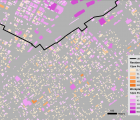
Figure 8: Results of the 24 hour building population estimation method for the city of Shizuoka at 12pm

Introduction: The city of Shizuoka directly faces the Nankai Trough (known for its tsunamigenic history), and is facing a potential tsunami threat. In this setting vertical evacuation can be of great significance in reducing loss of life.

Methods: We apply a GIS based method in order to identify sites that could be utilized for vertical evacuation within the existing building stock of the city, under two tsunami scenarios of 5 and 10 meters of run-up. For each building, we estimate the volume that is expected to be lost per scenario, as well as the number of people inside and how that number fluctuates over different times of the day.

Results: Using the criteria of 25% or less building volume loss and 6 cubic meters of volume per person, resulted in 2,046 potential sites for the 10 meter scenario and 1,643 potential sites for the 5 meter scenario, with the maximum amount of people that can potentially be accepted in these sites in the morning hours being 873,537 in the 10 meter scenario and 304,734 in the 5 meter scenario.

Discussion: Our approach has shown that there is a temporal aspect in tsunami vertical evacuation due to the movement of the local population throughout the day. the proposed method can be used for preliminary identification of potential vertical evacuation sites, however, it must be followed by further vulnerability and engineering assessments of buildings, in combination with accessibility and evacuation routing in order to reach a viable and complete evacuation plan.

Constructing the Indicators of Assessing Human Vulnerability to Industrial Chemical Accidents: A Consensus-based Fuzzy Delphi and Fuzzy AHP Approach

April 10, 2017 · Research Article

Introduction: Industrial chemical accidents have been increased in developing countries. Assessing the human vulnerability in the residents of industrial areas is necessary for reducing the injuries and causalities of chemical hazards. The aim of this study was to explore the key indicators for the assessment of human vulnerability in the residents living near chemical installations.

Methods: The indicators were established in the present study based on the Fuzzy Delphi method (FDM) and Fuzzy Analytic Hierarchy Process (FAHP). The reliability of FDM and FAHP was calculated. The indicators of human vulnerability were explored in two sets of social and physical domains. Thirty-five relevant experts participated in this study during March-July 2015.

Results: According to experts, the top three indicators of human vulnerability according to the FDM and FAHP were vulnerable groups, population density, and awareness. Detailed sub-vulnerable groups and awareness were developed based on age, chronic or severe diseases, disability, first responders, and residents, respectively. Each indicator and sub-indicator was weighted and ranked and had an acceptable consistency ratio.

Conclusions: The importance of social vulnerability indicators are about 7 times more than physical vulnerability indicators. Among the extracted indicators, vulnerable groups had the highest weight and the greatest impact on human vulnerability. however, further research is needed to investigate the applicability of established indicators and generalizability of the results to other studies.

Key words: Fuzzy Delphi; Fuzzy AHP; Human vulnerability; Chemical hazards      

« Newer Older »

Call for Submissions

Announcing Outbreaks

Twitter

Tweets about "#plosc_disasters OR @plosc_disasters OR \"PLOS Currents Disasters"\ OR \"PLOSCurrentsDisasters\" OR currents.plos.org/disasters lang:en"

Disasters Blog

  • Home
  • Terms of Use
  • Privacy Statement
  • About
  • Contact