



PLOS Currents Disasters

  • Log in
  • Home
  • Aims & Scope
  • Review Board
    • Reviewer Guide
  • Authors ↓
    • Author Guide
    • Figure Creation
    • Table Creation
    • Equation Creation
    • Reference Creation
    • PLOS Currents FAQ
  • Resources
  • About
    • Guidelines for Comments

PLOS Currents: Disasters

●  Peer-Reviewed by distinguished researchers  ●  Open Access and freely available to all  ●  Open Data Compliant ●  Archived in PubMed Central  ●  Indexed in PubMed & Scopus  ●  No Publication Fee

PLOS Currents Disasters

PLOS Currents Disasters is an innovative open-access publication for the rapid communication of new research results and operational analyses derived from the study or management of all types of disasters. Read more at the PLOS Medicine blog.  

About PLOS Currents Disasters

PLOS Currents Disasters aims to minimize the delay between the generation and publication of new research results and operational analyses derived from the study or management of all types of disasters — natural or manmade, local, regional or global. The content is peer-reviewed, citable, publicly archived in PubMed Central, as well as being indexed in Scopus and PubMed.

PLOS Currents Goals

PLOS Currents is a publication channel that aims to address four facets of scholarly research communications: 1) Decrease publishing time with a streamlined review and production process. 2) Focus: Publish research within a focused research community. 3) Flexibility: Unlock rigid article formats to reflect diversity and broaden forms of research disseminated. 4) Revisions: Free the static research article with revisions that document research in progress.

PLOS Currents Archive and Indexing

All PLOS Currents articles are publicly archived in PubMed Central and indexed in Scopus and PubMed.

Needs of Internally Displaced Women and Children in Baghdad, Karbala, and Kirkuk, Iraq

June 10, 2016 · Research Article

Background: The continuing conflict in Iraq has now created an estimated four million internally displaced persons (IDPs). The bulk of recently displaced persons are in Central Iraq, often in insecure and difficult situations.

Objective: To determine the health status and health needs of women and children, age 15 and under, among a sample of this IDP population in Kirkuk, Baghdad, and Karbala governorates.

Methods: Data were collected from the senior female in 1216 families which contained 3665 children living in 45 makeshift settlements.

Findings: The majority of IDPs were living in tents or religious centers. Repeated displacements were common. Kidnappings were reported by 5.2% of families, and 7.9% of families reported a death of a family member during or after displacement. Intentional violence accounted for 72.3% of deaths. Only a third of children in school at the time of displacement continued in school. On average, households had received assistance on 3.2 occasions since displacement, food being the most common form. Access to health services was difficult. Some form of transport was often required. Few women knew where to secure antenatal services and many did not know where childhood immunization services were available. During or after displacement 307 women had delivered or were currently pregnant. Complications of pregnancies were common, with a quarter reporting anemia, and 22.1% experiencing hemorrhage. Both communicable and non-communicable diseases (NCDs) were common in the women and children in the survey. Scabies, diarrhea and lice were common among children. Among women, hypertension accounted for 36.6% of NCDs and type 2 diabetes for 15.9%. Domestic violence directed against women was reported in 17.4% of families and against children in 26.6%

Interpretation: Women and children in IDP settlements of Central Iraq experience many vulnerabilities involving their health, education and their environment, in addition to living in physical danger. While some external assistance was received, much more is needed to meet the needs of a displaced population which is unlikely to return home soon.
Effectiveness of Interventions, Programs and Strategies for Gender-based Violence Prevention in Refugee Populations: An Integrative Review

April 19, 2016 · Research Article

Background: Gender based violence (GBV) remains one of the most serious threats to the health and safety of women and girls worldwide. The problem is even more pronounced in refugee populations where women and girls are at increased risk of violence. In 2015, UNHCR reported the highest number of forcibly displaced people in recorded history. Despite growing need, there have been few rigorous evaluations of interventions aimed at primary GBV prevention and no systematic reviews of GBV prevention efforts specifically focused on refugee populations; reviews to date have primarily examined prevention of conflict related sexual violence, with very limited focus on other forms of GBV such as intimate partner violence

Methods: This study reviewed the scientific literature addressing strategies for primary prevention of GBV and their effectiveness among refugee populations over the past ten years (2006 to 2015). Narrative content analysis methods were used to extract findings related to prevention activities/programs recommended by the global humanitarian community, such as sociocultural norms change, rebuilding family and community support structures, improving accountability systems, designing effective services and facilities, working with formal and traditional legal systems, monitoring and documenting GBV, and/or engaging men and boys in GBV prevention and response.

Results: Study findings indicate that a range of GBV prevention activities recommended by the global humanitarian community are currently being applied in a variety of settings. However, there remains a limited body of evidence on the effectiveness of GBV prevention programs, interventions, and strategies, especially among refugee populations.

Conclusion: Commonly agreed upon standards or guidelines for evaluation of GBV prevention programming, and publication of evaluations conducted using these guidelines, could assist humanitarian stakeholders to build and disseminate an evidence base of effective GBV prevention interventions, programs and strategies. Evaluation of GBV prevention efforts, especially among refugee populations, must be given higher priority to justify continuation or revision of recommended GBV activities/programs being implemented in diverse humanitarian settings.

Leveraging Social Computing for Personalized Crisis Communication using Social Media

March 24, 2016 · Review
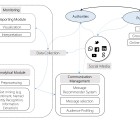
fig1

Introduction: The extensive use of social media in modern life redefines social interaction and communication. Communication plays an important role in mitigating, or exacerbating, the psychological and behavioral responses to critical incidents and disasters. As recent disasters demonstrated, people tend to converge to social media during and following emergencies. Authorities can then use this media and other computational methods to gain insights from the public, mainly to enhance situational awareness, but also to improve their communication with the public and public adherence to instructions.

Methods: The current review presents a conceptual framework for studying psychological aspects of crisis and risk communication using the social media through social computing.

Results: Advanced analytical tools can be integrated in the processes and objectives of crisis communication. The availability of the computational techniques can improve communication with the public by a process of Hyper-Targeted Crisis Communication.

Discussion: The review suggests that using advanced computational tools for target-audience profiling and linguistic matching in social media, can facilitate more sensitive and personalized emergency communication.

A Comparative Analysis of Disaster Risk, Vulnerability and Resilience Composite Indicators

March 14, 2016 · Research Article
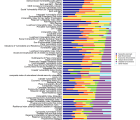
comp

Introduction: In the past decade significant attention has been given to the development of tools that attempt to measure the vulnerability, risk or resilience of communities to disasters. Particular attention has been given to the development of composite indices to quantify these concepts mirroring their deployment in other fields such as sustainable development. Whilst some authors have published reviews of disaster vulnerability, risk and resilience composite indicator methodologies, these have been of a limited nature. This paper seeks to dramatically expand these efforts by analysing 106 composite indicator methodologies to understand the breadth and depth of practice.

Methods: An extensive search of the academic and grey literature was undertaken for composite indicator and scorecard methodologies that addressed multiple/all hazards; included social and economic aspects of risk, vulnerability or resilience; were sub-national in scope; explained the method and variables used; focussed on the present-day; and, had been tested or implemented. Information on the index construction, geographic areas of application, variables used and other relevant data was collected and analysed.

Results: Substantial variety in construction practices of composite indicators of risk, vulnerability and resilience were found. Five key approaches were identified in the literature, with the use of hierarchical or deductive indices being the most common. Typically variables were chosen by experts, came from existing statistical datasets and were combined by simple addition with equal weights. A minimum of 2 variables and a maximum of 235 were used, although approximately two thirds of methodologies used less than 40 variables. The 106 methodologies used 2298 unique variables, the most frequently used being common statistical variables such as population density and unemployment rate. Classification of variables found that on average 34% of the variables used in each methodology related to the social environment, 25% to the disaster environment, 20% to the economic environment, 13% to the built environment, 6% to the natural environment and 3% were other indices. However variables specifically measuring action to mitigate or prepare for disasters only comprised 12%, on average, of the total number of variables in each index. Only 19% of methodologies employed any sensitivity or uncertainty analysis and in only a single case was this comprehensive.

Discussion: A number of potential limitations of the present state of practice and how these might impact on decision makers are discussed. In particular the limited deployment of sensitivity and uncertainty analysis and the low use of direct measures of disaster risk, vulnerability and resilience could significantly limit the quality and reliability of existing methodologies. Recommendations for improvements to indicator development and use are made, as well as suggested future research directions to enhance the theoretical and empirical knowledge base for composite indicator development.

Assessing Households Preparedness for Earthquakes: An Exploratory Study in the Development of a Valid and Reliable Persian-version Tool

February 25, 2016 · Research Article

Introduction: Iran is placed among countries suffering from the highest number of earthquake casualties. Household preparedness, as one component of risk reduction efforts, is often supported in quake-prone areas. In Iran, lack of a valid and reliable household preparedness tool was reported by previous disaster studies. This study is aimed to fill this gap by developing a valid and reliable tool for assessing household preparedness in the event of an earthquake.

Methods: This survey was conducted through three phases including literature review and focus group discussions with the participation of eight key informants, validity measurements and reliability measurements. Field investigation was completed with the participation of 450 households within three provinces of Iran. Content validity, construct validity, the use of factor analysis; internal consistency using Cronbach’s alpha coefficient, and test-retest reliability were carried out to develop the tool.

Results: Based on the CVIs, ranging from 0.80 to 0.100, and exploratory factor analysis with factor loading of more than 0.5, all items were valid. The amount of Cronbach’s alpha (0.7) and test-retest examination by Spearman correlations indicated that the scale was also reliable. The final instrument consisted of six categories and 18 questions including actions at the time of earthquakes, nonstructural safety, structural safety, hazard map, communications, drill, and safety skills.

Conclusion: Using a Persian-version tool that is adjusted to the socio-cultural determinants and native language may result in more trustful information on earthquake preparedness. It is suggested that disaster managers and researchers apply this tool in their future household preparedness projects. Further research is needed to make effective policies and plans for transforming preparedness knowledge into behavior.

Characteristics of an Effective International Humanitarian Assistance: A Systematic Review

February 25, 2016 · Research Article

Introduction: The objective of this study is to identify the effectiveness characteristics, review the definition of them, and develop a conceptual mapping of existing domains in the field of International Humanitarian Assistance (IHA).

Methods: We conducted a systematic review and searched the major databases (Science Direct, Scopus, Springer and Pubmed) and grey literature, including references of potentially eligible articles and conference proceedings through March 2015. Articles were included if they focused on IHA effectiveness. Reviewers independently identified the eligible studies and extracted data.

Results: 10 studies were included and 48 characteristics were identified. There is a lack of scientific studies and agreement on the characteristics of IHA effectiveness. 

Conclusion: This study could be the step toward an understanding of IHA effectiveness characteristics and its definitions with the findings making a base line for more research in this area. 

Rapid and Near Real-Time Assessments of Population Displacement Using Mobile Phone Data Following Disasters: The 2015 Nepal Earthquake

February 24, 2016 · Research Article

Introduction: Sudden impact disasters often result in the displacement of large numbers of people. These movements can occur prior to events, due to early warning messages, or take place post-event due to damages to shelters and livelihoods as well as a result of long-term reconstruction efforts. Displaced populations are especially vulnerable and often in need of support. However, timely and accurate data on the numbers and destinations of displaced populations are extremely challenging to collect across temporal and spatial scales, especially in the aftermath of disasters. Mobile phone call detail records were shown to be a valid data source for estimates of population movements after the 2010 Haiti earthquake, but their potential to provide near real-time ongoing measurements of population displacements immediately after a natural disaster has not been demonstrated.

Methods: A computational architecture and analytical capacity were rapidly deployed within nine days of the Nepal earthquake of 25th April 2015, to provide spatiotemporally detailed estimates of population displacements from call detail records based on movements of 12 million de-identified mobile phones users.

Results: Analysis shows the evolution of population mobility patterns after the earthquake and the patterns of return to affected areas, at a high level of detail. Particularly notable is the movement of an estimated 390,000 people above normal from the Kathmandu valley after the earthquake, with most people moving to surrounding areas and the highly-populated areas in the central southern area of Nepal.

Discussion: This analysis provides an unprecedented level of information about human movement after a natural disaster, provided within a very short timeframe after the earthquake occurred. The patterns revealed using this method are almost impossible to find through other methods, and are of great interest to humanitarian agencies.

Evacuation During Hurricane Sandy: Data from a Rapid Community Assessment

January 29, 2016 · Research Article

Introduction: In anticipation of Hurricane Sandy in 2012 New York City officials issued mandatory evacuation orders for evacuation Zone A. However, only a small proportion of residents complied. Failure to comply with evacuation warnings can result in severe consequences including injury and death. To better ascertain why individuals failed to heed pre­-emptive evacuation warnings for Hurricane Sandy we assessed factors that may have affected evacuation among residents in neighborhoods severely affected by the storm.

Methods: Data from a mental health needs assessment survey conducted among adult residents in South Brooklyn, the Rockaways, and Staten Island from December 13-­18, 2012 was assessed. Several disasters related questions were evaluated, and prevalence estimates of evacuation and evacuation timing by potential factors that may influence evacuation were estimated. Measures of association were assessed using chi-­square and t-­test.

Results: Our sample consisted of 420 residents of which, only 49% evacuated at any time for Sandy. Evacuation was higher among those who witnessed trauma to others related to the World Trade Center attacks (66% vs. 40%, p=0.024). Those who reported extensive household damage after Sandy, had a higher rate of evacuation than those with minimal damage (83% vs. 30%, p<0.001). Among those who evacuated, evacuation before the storm was lower among residents living on higher floors (56% vs. 22%, p=0.022).

Discussion: Given that warnings to evacuate were issued before Sandy made landfall, evacuation among residents in South Brooklyn, the Rockaways and Staten Island, while higher than the overall Zone A evacuation rate, was less than optimal. Continued research on evacuation behaviors is needed, particularly on how timing affects evacuation. A better understanding may help to reduce barriers, and improve evacuation compliance.

Immediate Needs and Concerns among Pregnant Women During and after Typhoon Haiyan (Yolanda)

January 25, 2016 · Research Article

Introduction: Pregnant and postpartum women are especially vulnerable to natural disasters. These women suffer from increased risk of physical and mental issues including pregnant related problems. Typhoon Haiyan (Yolanda), which hit the Philippines affected a large number of people and caused devastating damages. During and after the typhoon, pregnant women were forced to live in particularly difficult circumstances. The purpose of this study was to determine concerns and problems regarding public health needs and coping mechanisms among pregnant women during and shortly after the typhoon.

Methods: This study employed a cross-sectional design utilizing focus group discussions (FGDs). Participants were 53 women (mean age: 26.6 years old; 42 had children) from four affected communities who were pregnant at the time of the typhoon. FGDs were conducted 4 months after the typhoon, from March 19 to 28, 2014, using semi-structured interviews. Data were analyzed using the qualitative content analysis.

Result: Three themes were identified regarding problems and concerns during and after the typhoon: 1) having no ideas what is going to happen during the evacuation, 2) lacking essentials to survive, and 3) being unsure of how to deal with health concerns. Two themes were identified as means of solving issues: 1) finding food for survival and 2) avoiding diseases to save my family. As the pregnant women already had several typhoon experiences without any major problems, they underestimated the catastrophic nature of this typhoon. During the typhoon, the women could not ensure their safety and did not have a strong sense of crisis management. They suffered from hunger, food shortage, and poor sanitation. Moreover, though the women had fear and anxiety regarding their pregnancy, they had no way to resolve these concerns. Pregnant women and their families also suffered from common health problems for which they would usually seek medical services. Under such conditions, the pregnant woman cooperated with others for survival and used their knowledge of disease prevention.

Discussion: Pregnant women experienced difficulties with evacuation, a lack of minimum survival needs, and attending to their own health issues. Pregnant women were also concerned about needs and health issues of their families, particular, when they had small children. Collecting accurate information regarding the disaster and conducting self-sustainable preparation prior to the disaster among pregnant women will help them to protect their pregnancy status, thereby improving their families’ chance of survival during and after disasters.

Demographic Determinants of Disaster Preparedness Behaviors Amongst Tehran Inhabitants, Iran

December 11, 2015 · Research Article

Background: Tehran is vulnerable to natural hazards, especially earthquakes. Disaster preparedness behaviors (DPB) are measures that can mitigate the adverse consequences of disasters. Demographic factors affect DPB, however, the role of some of these factors is not still clear. By understanding these effects, disaster specialists could design interventions toward specific demographics. In the present study, we aimed to investigate demographic determinants of DPB.

Methods: This cross-sectional survey was conducted in August 2014. The target population included inhabitants of Tehran who were 18 years or older. A total of 1250 participants were selected randomly and interviewed using a standardized questionnaire.

Results: Results of our study showed that monthly income level, previous disaster experience, residential district and occupation are demographic factors that influence DPB significantly. However, disaster preparedness was not affected by gender, educational level, number of household members, home type, home ownership and being the head of household.

Conclusion: To promote DPB in Tehran, disaster specialists should focus on improving DPB in low-income and unemployed people, and individuals who live in high risk districts, especially in those who have not experienced disasters.

Key words: Disaster, Preparedness behavior, Demographic determinants.    

« Newer Older »

Call for Submissions

Announcing Outbreaks

newsletter signup

Sign Up for the PLOS Currents: Disasters Newsletter


Twitter

Tweets about "#plosc_disasters OR @plosc_disasters OR \"PLOS Currents Disasters"\ OR \"PLOSCurrentsDisasters\" OR currents.plos.org/disasters lang:en"

Disasters Blog

  • Home
  • Terms of Use
  • Privacy Statement
  • About
  • Contact