PLOS Currents Disasters

  • Log in
  • Home
  • Aims & Scope
  • Review Board
    • Reviewer Guide
  • Authors ↓
    • Author Guide
    • Figure Creation
    • Table Creation
    • Equation Creation
    • Reference Creation
    • PLOS Currents FAQ
  • Resources
  • About
    • Guidelines for Comments

PLOS Currents: Disasters

●  Peer-Reviewed by distinguished researchers  ●  Open Access and freely available to all  ●  Open Data Compliant ●  Archived in PubMed Central  ●  Indexed in PubMed & Scopus  ●  No Publication Fee

PLOS Currents Disasters

PLOS Currents Disasters is an innovative open-access publication for the rapid communication of new research results and operational analyses derived from the study or management of all types of disasters. Read more at the PLOS Medicine blog.  

About PLOS Currents Disasters

PLOS Currents Disasters aims to minimize the delay between the generation and publication of new research results and operational analyses derived from the study or management of all types of disasters — natural or manmade, local, regional or global. The content is peer-reviewed, citable, publicly archived in PubMed Central, as well as being indexed in Scopus and PubMed.

PLOS Currents Goals

PLOS Currents is a publication channel that aims to address four facets of scholarly research communications: 1) Decrease publishing time with a streamlined review and production process. 2) Focus: Publish research within a focused research community. 3) Flexibility: Unlock rigid article formats to reflect diversity and broaden forms of research disseminated. 4) Revisions: Free the static research article with revisions that document research in progress.

PLOS Currents Archive and Indexing

All PLOS Currents articles are publicly archived in PubMed Central and indexed in Scopus and PubMed.

Analysis of Landslides Triggered by October 2005, Kashmir Earthquake

August 26, 2015 · Research Article
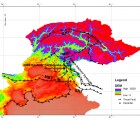
MKT= Main Karakoram Thrust, MMT= Main Mantle Thrust, MBT= Main Boundary Thrust, SRT= Salt Range Thrust

Introduction: The October 2005, Kashmir earthquake main event was triggered along the Balakot-Bagh Fault which runs from Bagh to Balakot, and caused more damages in and around these areas. Major landslides were activated during and after the earthquake inflicting large damages in the area, both in terms of infrastructure and casualties. These landslides were mainly attributed to the minimum threshold of the earthquake, geology of the area, climatologic and geomorphologic conditions, mudflows, widening of the roads without stability assessment, and heavy rainfall after the earthquake. These landslides were mainly rock and debris falls. Hattian Bala rock avalanche was largest landslide associated with the earthquake which completely destroyed a village and blocked the valley creating a lake.

Discussion: The present study shows that the fault rupture and fault geometry have direct influence on the distribution of landslides and that along the rupture zone a high frequency band of landslides was triggered. There was an increase in number of landslides due to 2005 earthquake and its aftershocks and that most of earthquakes have occurred along faults, rivers and roads. It is observed that the stability of landslide mass is greatly influenced by amplitude, frequency and duration of earthquake induced ground motion. Most of the slope failures along the roads resulted from the alteration of these slopes during widening of the roads, and seepages during the rainy season immediately after the earthquake.

Conclusion: Landslides occurred mostly along weakly cemented and indurated rocks, colluvial sand and cemented soils. It is also worth noting that fissures and ground crack which were induced by main and after shock are still present and they pose a major potential threat for future landslides in case of another earthquake activity or under extreme weather conditions.

Upstream Disaster Management to Support People Experiencing Homelessness

August 18, 2015 · Research Article

The unique context of day-to-day living for people who are chronically homeless or living with housing insecurity puts them at high risk during community disasters. The impacts of extreme events, such as flooding, storms, riots, and other sources of community disruption, underscore the importance of preparedness efforts and fostering community resilience. This study is part of larger initiative focused on enhancing resilience and preparedness among high risk populations. The purpose of this study was to explore critical issues and strategies to promote resilience and disaster preparedness among people who are homeless in Canada. A sample of interviews (n=21) from key informants across Canada was analyzed to explore existing programs and supports for homeless populations. The data was selected from a larger sample of (n=43) interviews focused on programs and supports for people who are at heightened risk for negative impacts during disasters. Qualitative content analysis was used to extract emergent themes and develop a model of multi-level collaboration to support disaster resilience among people who are homeless. The results indicate there is a need for more upstream continuity planning, collaboration and communication between the emergency management sector and community service organizations that support people who are homeless. Prioritization and investment in the social determinants of health and community supports is necessary to promote resilience among this high-risk population. The findings from this study highlight the importance of acknowledging community support organizations as assets in disaster preparedness. Day-to-day resilience is an ongoing theme for people who are chronically homeless or living with housing insecurity. Upstream investment to build adaptive capacity and collaborate with community organizations is an important strategy to enhance community resilience.

Virtual Disaster Simulation: Lesson Learned from an International Collaboration That Can Be Leveraged for Disaster Education in Iran

July 13, 2015 · Discussion

Disaster education needs innovative educational methods to be more effective compared to traditional approaches. This can be done by using virtual simulation method. This article presents an experience about using virtual simulation methods to teach health professional on disaster medicine in Iran.

The workshop on the “Application of New Technologies in Disaster Management Simulation” was held in Tehran in January 2015. It was co-organized by the Disaster and Emergency Health Academy of Tehran University of Medical Sciences and Emergency and the Research Center in Disaster Medicine and Computer Science applied to Medicine (CRIMEDIM), Università del Piemonte Orientale. Different simulators were used by the participants, who were from the health system and other relevant fields, both inside and outside Iran.

As a result of the workshop, all the concerned stakeholders are called on to support this new initiative of incorporating virtual training and exercise simulation in the field of disaster medicine, so that its professionals are endowed with field-based and practical skills in Iran and elsewhere.

Virtual simulation technology is recommended to be used in education of disaster management. This requires capacity building of instructors, and provision of technologies. International collaboration can facilitate this process. Keywords: Virtual simulation, disaster management, education, training, Iran

Correction: Can Medical Decision-making at the Scene by EMS Staff Reduce the Number of Unnecessary Ambulance Transportations, but Still Be Safe?

July 9, 2015 · Correction

Correction The affiliation for the first author is incorrect. The complete, correct affiliation is: Prehospital and Disaster Medicine Centre, Department of Surgery, Sahlgrenska Academy, Gothenburg University, Gothenburg, Sweden; Faculty of Shiraz University of Medical sciences, Shiraz, Iran. Reference Peyravi M, Örtenwall P, Khorram-Manesh A. Can Medical Decision-making at the Scene by EMS Staff Reduce the […]

Application of Behavioral Theories to Disaster and Emergency Health Preparedness: A Systematic Review

July 1, 2015 · Research Article

Background: Preparedness for disasters and emergencies at individual, community and organizational levels could be more effective tools in mitigating (the growing incidence) of disaster risk and ameliorating their impacts. That is, to play more significant roles in disaster risk reduction (DRR). Preparedness efforts focus on changing human behaviors in ways that reduce people’s risk and increase their ability to cope with hazard consequences. While preparedness initiatives have used behavioral theories to facilitate DRR, many theories have been used and little is known about which behavioral theories are more commonly used, where they have been used, and why they have been preferred over alternative behavioral theories. Given that theories differ with respect to the variables used and the relationship between them, a systematic analysis is an essential first step to answering questions about the relative utility of theories and providing a more robust evidence base for preparedness components of DRR strategies. The goal of this systematic review was to search and summarize evidence by assessing the application of behavioral theories to disaster and emergency health preparedness across the world.

Methods: The protocol was prepared in which the study objectives, questions, inclusion and exclusion criteria, and sensitive search strategies were developed and pilot-tested at the beginning of the study. Using selected keywords, articles were searched mainly in PubMed, Scopus, Mosby’s Index (Nursing Index) and Safetylit databases. Articles were assessed based on their titles, abstracts, and their full texts. The data were extracted from selected articles and results were presented using qualitative and quantitative methods.

Results: In total, 2040 titles, 450 abstracts and 62 full texts of articles were assessed for eligibility criteria, whilst five articles were archived from other sources, and then finally, 33 articles were selected. The Health Belief Model (HBM), Extended Parallel Process Model (EPPM), Theory of Planned Behavior (TPB) and Social Cognitive Theories were most commonly applied to influenza (H1N1 and H5N1), floods, and earthquake hazards. Studies were predominantly conducted in USA (13 studies). In Asia, where the annual number of disasters and victims exceeds those in other continents, only three studies were identified. Overall, the main constructs of HBM (perceived susceptibility, severity, benefits, and barriers), EPPM (higher threat and higher efficacy), TPB (attitude and subjective norm), and the majority of the constructs utilized in Social Cognitive Theories were associated with preparedness for diverse hazards. However, while all the theories described above describe the relationships between constituent variables, with the exception of research on Social Cognitive Theories, few studies of other theories and models used path analysis to identify the interdependence relationships between the constructs described in the respective theories/models. Similarly, few identified how other mediating  variables could influence disaster and emergency preparedness. 

Conclusions: The existing evidence on the application of behavioral theories and models to disaster and emergency preparedness is chiefly from developed countries. This raises issues regarding their utility in countries, particularly in Asisa and the Middle East, where cultural characteristics are very different to those prevailing in the Western countries in which theories have been developed and tested. The theories and models discussed here have been applied predominantly to disease outbreaks and natural hazards, and information on their utility as guides to preparedness for man-made hazards is lacking. Hence, future studies related to behavioral theories and models addressing preparedness need to target developing countries where disaster risk  and the consequent need for preparedness is high. A need for additional work on demonstrating the relationships of variables and constructs, including more clearly articulating roles for mediating effects was also identified in this analysis. 

Post Disaster Governance, Complexity and Network Theory

Evidence from Aceh, Indonesia After the Indian Ocean Tsunami 2004

July 1, 2015 · Research Article

This research aims to understand the organizational network typology of large­-scale disaster intervention in developing countries and to understand the complexity of post-­disaster intervention, through the use of network theory based on empirical data from post-­tsunami reconstruction in Aceh, Indonesia, during 2005/­2007. The findings suggest that the ‘ degrees of separation’ (or network diameter) between any two organizations in the field is 5, thus reflecting ‘small­ world’ realities and therefore making no significant difference with the real human networks, as found in previous experiments. There are also significant loops in the network reflecting the fact that some actors tend to not cooperate, which challenges post­ disaster coordination. The findings show the landscape of humanitarian actors is not randomly distributed. Many actors were connected to each other through certain hubs, while hundreds of actors make ‘scattered’ single ‘principal-­client’ links. The paper concludes that by understanding the distribution of degree, centrality, ‘degrees of separation’ and visualization of the network, authorities can improve their understanding of the realities of coordination, from macro to micro scales.

Support Needs for Canadian Health Providers Responding to Disaster: New Insights from a Grounded Theory Approach

July 1, 2015 · Research Article

Introduction: An earlier descriptive study exploring the various supports available to Canadian health and social service providers who deployed to the 2010 earthquake disaster in Haiti, indicated that when systems are compromised, professionals are at physical, emotional and mental risk during overseas deployment. While these risks are generally well-identified, there is little literature that explores the effectiveness of the supports in place to mitigate this risk. This study provides evidence to inform policy development regarding future disaster relief, and the effectiveness of supports available to responders assisting with international disaster response.

Methods: This study follows Strauss and Corbin’s 1990 structured approach to grounded theory to develop a framework for effective disaster support systems. N=21 interviews with Canadian health and social service providers, who deployed to Haiti in response to the 2010 earthquake, were conducted and analyzed. Resulting data were transcribed, coded and analysed for emergent themes.

Results and Discussion: Three themes were identified in the data and were used to develop the evolving theory. The interview data indicate that the experiences of responders are determined based on an interaction between the individual’s ‘lens’ or personal expectations, as well as the supports that an organization is able to provide. Therefore, organizations should consider the following factors: experience, expectations, and supports, to tailor a successful support initiative that caters to the needs of the volunteer workforce.

Can Medical Decision-making at the Scene by EMS Staff Reduce the Number of Unnecessary Ambulance Transportations, but Still Be Safe?

June 30, 2015 · Research Article

Objectives: The aim of this study was to evaluate the procedures adopted by the staff of the Shiraz Emergency Medical Services (EMS) and the outcome of the patients discharged from the scene over a one-year period.  

Background: Unnecessary use of ambulances results in the overloading of EMS and the over-crowding of emergency departments. Medical assessment at the scene by EMS staff may reduce these issues. In an earlier study in Shiraz, 36% of the patients were left at home/discharged directly from the scene with or without treatment by EMS staff after consulting a physician at the dispatch center. However, there has been no evaluation of this system with regard to mortality and morbidity.  

Materials and Methods: Retrospective data on all missions performed by the Shiraz EMS (2012-2013) were reviewed. All the patients discharged from the scene by the EMS staff on the 5th, 15th, and 25th days of each month were included. A questionnaire with nine questions was designed, and available patients/relatives were interviewed prospectively (2014; follow-up period 4-12 months).  

Results: Out of 3019 cases contacted, 994 (almost 33%) replied. There were 26%-93% reductions in the complaints in all disease categories. A group of the patients left the scene at their own will. Of those who were discharged by the EMS staff at the scene, over 60% were without any complaints. Twelve out of 253 patients died after they were sent home by the EMS staff.   Conclusions: Patients may be discharged at the scene by EMS staff and after consulting a physician. However, there is a need for a solid protocol to ensure total patient safety. This calls for a prospective study. 

Twitter as a Potential Disaster Risk Reduction Tool. Part I: Introduction, Terminology, Research and Operational Applications

June 29, 2015 · Research Article

Twitter, a popular communications platform, is identified as contributing to improved mortality and morbidity outcomes resulting from the 2013 Hattiesburg, Mississippi EF-4 Tornado. This study describes the methodology by which Twitter was investigated as a potential disaster risk reduction and management tool at the community level and the process by which the at-risk population was identified from the broader Twitter user population. By understanding how various factors contribute to the superspreading of messages, one can better optimize Twitter as an essential communications and risk reduction tool. This study introduces Parts II, III and IV which further define the technological and scientific knowledge base necessary for developing future competency base curriculum and content for Twitter assisted disaster management education and training at the community level. 

Twitter as a Potential Disaster Risk Reduction Tool. Part II: Descriptive Analysis of Identified Twitter Activity during the 2013 Hattiesburg F4 Tornado

June 29, 2015 · Research Article

Background: This article describes a novel triangulation methodological approach for identifying twitter activity of regional active twitter users during the 2013 Hattiesburg EF-4 Tornado.

Methodology: A data extraction and geographically centered filtration approach was utilized to generate Twitter data for 48 hrs pre- and post-Tornado. The data was further validated using six sigma approach utilizing GPS data. Results: The regional analysis revealed a total of 81,441 tweets, 10,646 Twitter users, 27,309 retweets and 2637 tweets with GPS coordinates.

Conclusions: Twitter tweet activity increased 5 fold during the response to the Hattiesburg Tornado.  Retweeting activity increased 2.2 fold. Tweets with a hashtag increased 1.4 fold. Twitter was an effective disaster risk reduction tool for the Hattiesburg EF-4 Tornado 2013. 

« Newer Older »

Call for Submissions

Announcing Outbreaks

newsletter signup

Sign Up for the PLOS Currents: Disasters Newsletter


Twitter

Tweets about "#plosc_disasters OR @plosc_disasters OR \"PLOS Currents Disasters"\ OR \"PLOSCurrentsDisasters\" OR currents.plos.org/disasters lang:en"

Disasters Blog

  • Home
  • Terms of Use
  • Privacy Statement
  • About
  • Contact