

PLOS Currents Outbreaks

  • Log in
  • Home
  • Aims & Scope
  • Review Board
    • Reviewer Guide
  • Authors ↓
    • Author Guide
    • Figure Creation
    • Table Creation
    • Equation Creation
    • Reference Creation
    • Author FAQ
  • Resources
  • About
    • Guildelines for Comments

PLOS Currents: Outbreaks

●  Peer-Reviewed by distinguished researchers  ●  Open Access and freely available to all  ●  Open Data Compliant ●  Archived in PubMed Central  ●  Indexed in PubMed & Scopus  ●  No Publication Fee

Epidemiological Review of Francisella Tularensis: A Case Study in the Complications of Dual Diagnoses

January 18, 2018 · Research Article
Figure 1 – Photograph of a spleen obtained from the gross necropsy of a 7 year old cat after fixation. Reprinted under a CC by license, with permission from Dr. Kelli Almes, original copyright 2017.

Introduction: Tularemia is a rare but potentially fatal disease that develops in numerous wild and domestic animals, including lagomorphs, rodents, cats, and humans.  Francisella tularensis bacterium, the causative agent of tularemia, was identified by veterinary personnel at Fort Riley, Kansas during a routine post-mortum evaluation of a domestic feline. However, before formal diagnosis was confirmed, the sample was sent and prepared for rabies testing at the Department of Defense (DoD) U.S. Army Public Health Command Central (PHC-C), Food Analysis and Diagnostic Laboratory (FADL).  This case report provides insight on how veterinarian staff and laboratory personnel can clinically manage esoteric, unexplained, or post-mortum examinations.  The epidemiologic characteristics of tularemia, F. tularensis as an organism of military interest, potential laboratory management of F. tularensis, and clinical findings on a case of feline tularemia are discussed. It further raises questions as to whether or not dead animals should be treated as sentinels and be pre-screened for select agents, especially in instances of dual diagnoses.

Methods: A necropsy was performed on the cat by the Fort Riley veterinarian, DNA extraction and PCR analyses were conducted by FADL microbiologists, histology and immunohistology analyses were conducted by the Kansas State Veterinary Diagnostic Laboratory, and feline tissue and blood were sent to the U.S. Army Medical Research Institute of Infectious Diseases (USAMRIID) for confirmatory testing and strain identification of tularemia. 

Results: Tularemia was identified in the spleen of the cat by the Fort Riley veterinarian and during the histological sampling of the spleen by the Kansas State Veterinary Diagnostic Laboratory.  A specific subsequent real-time polymerase chain reaction (RT-PCR) in vitro diagnostic detection of target DNA sequences of F. tularensis was conducted by the FADL microbiologists using a Joint Biological Agent Identification and Diagnostic System (JBAIDS) Tularemia Detection Kit to detect a presumptive qualitative result to detect tularemia in feline and blood samples.   USAMRIID also performed RT-PCR and identified genomic DNA from F. tularensis Type A, (SPL15.013.02), thus confirming the FADL’s initial presumptive result of F. tularensis.  USAMRIID attempted to culture F. tularensis from three samples (swab, feline tissue, and transfer pipette tip), but no growth consistent with F. tularensis was observed on the cysteine heart agar with sheep blood and antibiotics (CHAB) and chocolate (CHOC) plates. 

Discussions: Our case study of a dual diagnosis of presumptive F. tularensis and possible rabies exposure transmission from a pet cat to its owner provides insight on how veterinarian staff and laboratory personnel can clinically manage esoteric, unexplained, or post-mortum examinations.  Our case study also demonstrates the obligation for cooperation between animal health, human health, and public health professionals in the management of zoonotic diseases.
Incidence Prediction for the 2017-2018 Influenza Season in the United States with an Evolution-informed Model

January 17, 2018 · Research Article

Introduction: Seasonal influenza is responsible for a high disease burden in the United States and worldwide. Predicting outbreak size in advance can contribute to the timely control of seasonal influenza by informing health care and vaccination planning.

Methods: Recently, a process-based model was developed for forecasting incidence dynamics ahead of the season, with the approach validated by several statistical criteria, including an accurate real-time prediction for the past 2016-2017 influenza season before it started.

Results: Based on this model and data up to June 2017, a forecast for the upcoming 2017-2018 influenza season is presented here, indicating an above-average, moderately severe, outbreak dominated by the H3N2 subtype.

Discussion: The prediction is consistent with surveillance data so far, which already indicate the predominance of H3N2. The forecast for the upcoming 2017-2018 influenza season reinforces the importance of the on-going vaccination campaign.

A Possible Link Between Pyriproxyfen and Microcephaly

November 27, 2017 · Research Article

The Zika virus has been the primary suspect in the large increase in incidence of microcephaly in 2015-6 in Brazil. While evidence for Zika being the cause of some of the cases is strong, its role as the primary cause of the large number of cases in Brazil has not been confirmed. Recently, the disparity between the incidences in different geographic locations has led to questions about the virus’s role. Here we consider the alternative possibility that the use of the insecticide pyriproxyfen for control of mosquito populations in Brazilian drinking water is the primary cause. Pyriproxifen is a juvenile hormone analog which has been shown to correspond in mammals to a number of fat soluble regulatory molecules including retinoic acid, a metabolite of vitamin A, with which it has cross-reactivity and whose application during development has been shown to cause microcephaly. Methoprene, another juvenile hormone analog that was approved as an insecticide based upon tests performed in the 1970s, has metabolites that bind to the mammalian retinoid X receptor, and has been shown to cause developmental disorders in mammals. Isotretinoin is another example of a retinoid causing microcephaly in human babies via maternal exposure and activation of the retinoid X receptor in developing fetuses. Moreover, tests of pyriproxyfen by the manufacturer, Sumitomo, widely quoted as giving no evidence for developmental toxicity, actually found some evidence for such an effect, including low brain mass and arhinencephaly—incomplete formation of the anterior cerebral hemispheres—in exposed rat pups. Finally, the pyriproxyfen use in Brazil is unprecedented—it has never before been applied to a water supply on such a scale. Claims that it is not being used in Recife, the epicenter of microcephaly cases, do not distinguish the metropolitan area of Recife, where it is widely used, and the municipality, and have not been adequately confirmed. Given this combination of information about molecular mechanisms and toxicological evidence, we strongly recommend that the use of pyriproxyfen in Brazil be suspended until the potential causal link to microcephaly is investigated further.

Detecting Local Zika Virus Transmission in the Continental United States: A Comparison of Surveillance Strategies

November 22, 2017 · Research Article

Introduction: The 2015-2017 Zika virus (ZIKV) epidemic in the Americas has driven efforts to strengthen surveillance systems and to develop interventions, testing, and travel recommendations. In the continental U.S. and Hawaii, where limited transmission has been observed, detecting local transmission is a key public health objective. We assessed the effectiveness of three general surveillance strategies for this situation: testing all pregnant women twice during pregnancy, testing blood donations, and testing symptomatic people who seek medical care in an emergency department (ED).

Methods: We developed a simulation model for each surveillance strategy and simulated different transmission scenarios with varying population sizes and infection rates. We then calculated the probability of detecting transmission, the number of tests needed, and the number of false positive test results.

Results: The probability of detecting ZIKV transmission was highest for testing ED patients with Zika symptoms, followed by pregnant women and blood donors, in that order. The magnitude of the difference in probability of detection between strategies depended on the incidence of infection. Testing ED patients required fewer tests and resulted in fewer false positives than surveillance among pregnant women. The optimal strategy identified was to test ED patients with at least two Zika virus disease symptoms. This case definition resulted in a high probability of detection with relatively few tests and false positives.

Discussion: In the continental U.S. and Hawaii, where local ZIKV transmission is rare, optimizing the probability of detecting infections while minimizing resource usage is particularly important. Local surveillance strategies will be influenced by existing public health system infrastructure, but should also consider the effectiveness of different approaches. This analysis demonstrated differences across strategies and indicated that testing symptomatic ED patients is generally a more efficient strategy for detecting transmission than routine testing of pregnant women or blood donors. 

Excess Mortality Related to Chikungunya Epidemics in the Context of Co-circulation of Other Arboviruses in Brazil

November 13, 2017 · Research Article
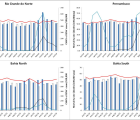
Figure 1 2nd version

Introduction: Chikungunya is an emerging arbovirus that reached the Western Hemisphere at the end of 2013. Studies in the Indian Ocean and India suggest that passive surveillance systems cannot recognize many of deaths associated with chikungunya, which can be inferred by an increase in the overall mortality observed during chikungunya epidemics.

Objective: We assess the mortality associated with chikungunya epidemics in the most affected states in Brazil, from 2015 and 2016.

Methods: We studied the monthly mortality by age group, comparing a period without epidemics to a chikungunya epidemic period, which we defined arbitrarily as consecutive months with incidences of more than 50 cases/100,000 persons.

Results: We obtained official data from the National System of Reported Diseases (SINAN) and the Mortality Information System (SIM), both maintained by the Ministry of Health. We identified a significant increase in the all-cause mortality rate during chikungunya epidemics, while there was no similar mortality in the previous years, even during dengue epidemics. We estimated an excess of 4,505 deaths in Pernambuco during the chikungunya epidemics (47.9 per 100,000 persons).The most affected age groups were the elderly and those under 1 year of age, and the same pattern occurred in all the states.

Discussion: Further studies at other sites are needed to confirm the association between increased mortality and chikungunya epidemics indifferent age groups. If these findings are confirmed, it will be necessary to revise the guidelines to recognize the actual mortality associated with chikungunya and to improve therapeutic approaches and protective measures in the most vulnerable groups.

Enhancing Ebola Virus Disease Surveillance and Prevention in Counties Without Confirmed Cases in Rural Liberia: Experiences from Sinoe County During the Flare-up in Monrovia, April to June, 2016

November 9, 2017 · Research Article

Introduction: During the flare-ups of Ebola virus disease (EVD) in Liberia, Sinoe County reactivated the multi-sectorial EVD control strategy in order to be ready to respond to the eventual reintroduction of cases. This paper describes the impacts of the interventions implemented in Sinoe County during the last flare-up in Monrovia, from April 1 to June 9, 2016, using the resources provided during the original outbreak that ended a year ago.

Methods: We conducted a descriptive study to describe the key interventions implemented in Sinoe County, the capacity available, the implications for the reactivation of the multi-sectoral EVD control strategy, and the results of the same. We also conducted a cross-sectional study to analyze the impact of the interventions on the surveillance and on infection prevention and control (IPC).

Results: The attrition of the staff trained during the original outbreak was low, and most of the supplies, equipment, and infrastructure from the original outbreak remained available. With an additional USD 1755, improvements were observed in the IPC indicators of triage, which increased from a mean of 60% at the first assessment to 77% (P=0.002). Additionally, personnel/staff training improved from 78% to 89% (P=0.04). The percentage of EVD death alerts per expected deaths investigated increased from 26% to 63% (P<0.0001).

Discussion: The low attrition of the trained staff and the availability of most supplies, equipment, and infrastructure made the reactivation of the multi-sectoral EVD control strategy fast and affordable. The improvement of the EVD surveillance was possibly affected by the community engagement activities, awareness and mentoring of the health workers, and improved availability of clinicians in the facilities during the flare-up. The community engagement may contribute to the report of community-based events, specifically community deaths. The mentoring of the staff during the supportive supervisions also contributed to improve the IPC indicators.

An Outbreak of Pseudomonas Aeruginosa Infection Linked to a “Black Friday” Piercing Event

October 16, 2017 · Research Article

Introduction

Outbreaks linked to cosmetic piercing are rare, but can cause significant illness. We report the investigation and management of a point-source outbreak that occurred during a Black Friday promotional event in North West England.

Methods

Outbreak investigation was led by Public Health England, and included active case finding among individuals pierced at a piercing premises between 25/11/2016 (Black Friday) and 7/12/2016. Detailed epidemiological, environmental (including inspection and sampling), and microbiological investigation was undertaken.

Results

During the Black Friday event (25/11/2016), 45 people were pierced (13 by a newly-appointed practitioner). Eleven cases were identified (7 microbiologically-confirmed, 2 probable, and 2 possible). All cases had clinical signs of infection around piercing sites, and five required surgical intervention, with varying degrees of post-operative disfigurement. All confirmed and probable cases had a scaffold piercing placed with a guide bar by the newly-appointed practitioner. Pseudomonas aeruginosa, indistinguishable at nine-locus variable-number tandem repeat loci, was isolated from four of the confirmed cases, and from pre- and post-flush samples from five separate water taps (three sinks) in the premises. Water samples taken after remedial plumbing work confirmed elimination of Pseudomonas contamination.

Discussion

Although high levels of Pseudomonas water contamination and some poor infection control procedures were identified, infection appeared to require additional exposure to an inexperienced practitioner, and the more invasive scaffold piercing. A proactive collaborative approach between piercers and health and environmental officials is required to reduce outbreak risk, particularly when unusually large events are planned

First Wave of the 2016-17 Cholera Outbreak in Hodeidah City, Yemen – ACF Experience and Lessons Learned

October 13, 2017 · Research Article

Introduction: Although cases were reported only in 2010 and 2011, cholera is probably endemic in Yemen. In the context of a civil war, a cholera outbreak was declared in different parts of the country October 6th, 2016. This paper describes the ACF outbreak response in Hodeidah city from October 28th, 2016 to February 28th, 2017 in order to add knowledge to this large outbreak.

Methods: The ACF outbreak response in Hodeidah city included a case management component and prevention measures in the community. In partnership with the Ministry of Public Health and Population of Yemen (MoPHP), the case management component included a Cholera Treatment Center (CTC) implemented in the Al Thoraw hospital, 11 Oral Rehydration Therapy Corners (ORTCs) and an active case finding system. In partnership with other stakeholders, prevention measures in the community, including access to safe water and hygiene promotion, were implemented in the most affected communities of the city.

Results: From October 28th, 2016 until February 28th, 2017, ACF provided care to 8,270 Acute Watery Diarrhea (AWD) cases, of which 5,210 (63%) were suspected cholera cases, in the CTC and the 11 ORTCs implemented in Hodeidah city. The attack rate was higher among people living in Al Hali district, with a peak in November 2016. At the CTC, 8% of children under 5 years-old also presented with Severe Acute Malnutrition (SAM). The Case-Fatality Rate (CFR) was low (0.07%) but 15% of admitted cases defaulted for cultural and security reasons. Environmental management lacked the information to appropriately target affected areas. Financial resources did not allow complete coverage of the city.

Conclusion: Response to the first wave of a large cholera outbreak in Hodeidah city was successful in maintaining a CFR <1% in the CTC. However, considering the actual context of Yemen and its water infrastructure, much more efforts are needed to control the current outbreak resurgence.

Assessing the Prevalence of Risk Factors for Neglected Tropical Diseases in Brazos County, Texas

October 4, 2017 · Research Article

Introduction: Although more than one billion people live at risk of neglected tropical diseases (NTDs) in areas of Asia, sub-Saharan Africa, and Latin America, the degree to which they burden countries like the U.S. is unclear. Even though many NTDs such as dengue, leishmaniasis, and Chagas disease are typically not endemic to the U.S., the possibility of their emergence is noteworthy, especially in states like Texas with high levels of poverty, large immigrant populations, geographic proximity to endemic areas, and a climate amenable to the vectors for these diseases. Despite the health threat that emerging NTDs may pose, little is known about the prevalence of risk factors for NTDs in the U.S.

Methods: We tested the Community Assessment for Public Health Emergency Response (CASPER) method to assess the prevalence of risk factors for NTDs in Brazos County, Texas.

Results: We found relatively low prevalence of risk factors related to travel (5.2% of respondents visited an endemic area in the previous 3 months); however, few respondents reported adherence to mosquito prevention, such as wearing long sleeves and long pants (14.1%, 95% CI: 13.9,14.4) and repellant containing DEET (13.5%, 95% CI: 13.2,13.7). Between 5.4% and 35.8% of respondents had a visible container (e.g., pet water dishes, flower pots, bird baths) that could support mosquito breeding.

Discussion: CASPER findings present public health authorities with potential avenues for implementing health education and other interventions aimed at reducing exposure to risk factors for NTDs among Texas residents.

Fetal Zika Virus Infection in Vietnam

September 5, 2017 · Research Article

As of 13 July 2016, 13 countries have reported fetal Zika virus (ZIKV) infection. Here we report a case of fetal ZIKV infection that resulted from an infection originating in Vietnam.

« Newer Older »

Zika Collection

Vaccine Hesitancy Collection

PLOS Science Reddit AMA

HealthMap Zika

New Twitter

Tweets about "PLOSCurrentsOUT OR PLOS Currents Outbreaks"
  • Home
  • Terms of Use
  • Privacy Statement
  • About
  • Contact