PLOS Currents Disasters

  • Log in
  • Home
  • Aims & Scope
  • Review Board
    • Reviewer Guide
  • Authors ↓
    • Author Guide
    • Figure Creation
    • Table Creation
    • Equation Creation
    • Reference Creation
    • PLOS Currents FAQ
  • Resources
  • About
    • Guidelines for Comments

PLOS Currents: Disasters

●  Peer-Reviewed by distinguished researchers  ●  Open Access and freely available to all  ●  Open Data Compliant ●  Archived in PubMed Central  ●  Indexed in PubMed & Scopus  ●  No Publication Fee

PLOS Currents Disasters

PLOS Currents Disasters is an innovative open-access publication for the rapid communication of new research results and operational analyses derived from the study or management of all types of disasters. Read more at the PLOS Medicine blog.  

About PLOS Currents Disasters

PLOS Currents Disasters aims to minimize the delay between the generation and publication of new research results and operational analyses derived from the study or management of all types of disasters — natural or manmade, local, regional or global. The content is peer-reviewed, citable, publicly archived in PubMed Central, as well as being indexed in Scopus and PubMed.

PLOS Currents Goals

PLOS Currents is a publication channel that aims to address four facets of scholarly research communications: 1) Decrease publishing time with a streamlined review and production process. 2) Focus: Publish research within a focused research community. 3) Flexibility: Unlock rigid article formats to reflect diversity and broaden forms of research disseminated. 4) Revisions: Free the static research article with revisions that document research in progress.

PLOS Currents Archive and Indexing

All PLOS Currents articles are publicly archived in PubMed Central and indexed in Scopus and PubMed.

The Life Process of Children Who Survived the Manjil Earthquake: A Decaying or Renewing Process

April 4, 2017 · Disasters

Introduction: Among earthquake survivors, children are more vulnerable than other age groups due to their exposure to harrowing scenes of devastation as well as their drastically new living situations that result from an earthquake disaster. The life process of children survivors undergoes many different changes that are affected by a wide range of factors. Understanding the life process of these children may lead to effective outcomes and interventions. In addition, observing children survivors establishes knowledge and understanding of the challenges that correspond with earthquake disasters. Further, observing this group may be further effective in decision-making and establishing types of assistance in similar circumstances.

Objectives: This study was done to explain the life process of children who survived the earthquake of Manjil in northern side of Iran.

Methods: This qualitative study is based on the grounded theory approach. The sampling involved purposive interviews with 12 children who survived the Manjil earthquake and were under 12 years of age at the time of the earthquake. The initial interviews were followed by continuous comparative analysis, and thus the sampling process adopted a theoretical trend. In the end, by the formation of categories and the central variable of the study, interviews were conducted with 16 subjects and sufficient data was provided. Data was collected through face-to-face, in-depth interviews using an interview guide. In order to enrich the categories formed in data analysis, we had also 6 telephone interviews with the same participants in order to complete missed needed information. Data collection began in 2015 and continued up until 2016. Data was analysed using the Strauss-Corbin approach.

Results: The life process of children earthquake survivors consists of ‘unexpected encounter’, ‘transient relief activities’ and ‘long-lasting consequences’. The central variable of this study is ‘the dark shadow of pain and the light shadow of life expectancy’. The life experience of this group of children is immersed in painful memories and varies under different conditions.

Discussion and Conclusion: According to the results of this study, one of the factors affecting the lives of children earthquake survivors which could threaten their health is providing non-specific and transient services. Training relief staff to consider the specific needs of these children at the time of the rescue operation could contribute to improving their health level in various aspects. Considering the effective and comprehensive rehabilitation program in Disaster Management by policymakers can prevent permanent complications caused by earthquakes. Planning and taking action to identify misbehaviours in this group of children as well as raising public awareness, particularly for parents, on how to manage the outcomes of natural disasters are some of the most significant public health priorities. Providing public mental health services for parents and children who survive an earthquake helps to address potential psychological problems in this group of survivors.
Towards Providing Solutions to the Air Quality Crisis in the Mexico City Metropolitan Area: Carbon Sequestration by Succulent Species in Green Roofs

March 31, 2017 · Disasters
FeaturedImage.JPG

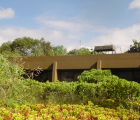
INTRODUCTION: In the first months of 2016, the Mexico City Metropolitan Area experienced the worst air pollution crisis in the last decade, prompting drastic short-term solutions by the Mexico City Government and neighboring States. In order to help further the search for long-term sustainable solutions, we felt obliged to immediately release the results of our research regarding the monitoring of carbon sequestration by green roofs. Large-scale naturation, such as the implementation of green roofs, provides a way to partially mitigate the increased carbon dioxide output in urban areas.

METHODS: Here, we quantified the carbon sequestration capabilities of two ornamental succulent plant species, Sedum dendroideum and Sedum rubrotinctum, which require low maintenance, and little or no irrigation. To obtain a detailed picture of these plants’ carbon sequestration capabilities, we measured carbon uptake on the Sedum plants by quantifying carbon dioxide exchange and fixation as organic acids, during the day and across the year, on a green roof located in Southern Mexico City.

RESULTS: The species displayed their typical CAM photosynthetic metabolism. Moreover, our quantification allowed us to conservatively estimate that a newly planted green roof of Sedum sequesters approximately 180,000,000 ppm of carbon dioxide per year in a green roof of 100 square meters in the short term.

DISCUSSION: The patterns of CAM and carbon dioxide sequestration were highly robust to the fluctuations of temperature and precipitation between seasons, and therefore we speculate that carbon sequestration would be comparable in any given year of a newly planted green roof. Older green roof would require regular trimming to mantain their carbon sink properties, but their carbon sequestration capabilities remain to be quantified. Nevertheless, we propose that Sedum green roofs can be part of the long-term solutions to mitigate the air pollution crisis in the Mexico City Metropolitan area, and other “megacities” with marked seasonal drought.

The Development of a Veterans Health Administration Emergency Management Research Agenda

March 23, 2017 · Brief Report

Introduction: The Veterans Health Administration (VHA), the largest integrated healthcare delivery system in the United States, is charged with ensuring timely access to high-quality care for veterans during disasters, and supporting national, state, local, and tribal emergency management and homeland security efforts. In 2008, the VHA Office of Public Health (OPH) sponsored the first VHA Emergency Management Research Agenda-setting conference to develop research priorities that address the needs of veterans and to position VHA as a national leader in emergency management by having VHA serve as a “laboratory” for the development of evidence-based emergency management practices.

Methods: We focused on four steps: #1: Appraising the emergency management research portfolio of VHA-based researchers; #2: Obtaining systematic information on VHA’s role in emergency management and the healthcare needs of veterans during disasters; #3: Based upon gaps between the current research portfolio and the existing evidence base, identifying strategic priorities using a research agenda-setting conference; and #4: Laying the groundwork to foster the conduct of emergency management research within VHA.

Results: Identified research priorities included how to prevent and treat behavioral health problems related to a disaster, the efficacy of training programs, crisis communication strategies, workforce resilience, and evacuating veterans from health care facilities.

Conclusion: VHA is uniquely situated to answer research questions that cannot be readily addressed in other settings. VHA should partner with other governmental and private entities to build on existing work and establish shared research priorities.

The Demand for Disaster Microinsurance for Small Businesses in Urban Slums: The Results of Surveys in Three Indian Cities

March 1, 2017 · Research Article

Background: Small informal businesses make up the core markets for many poor urban communities, providing essential goods, services, and livelihoods. Many of these communities and businesses exist in hazardous locations. In most cases, these business owners do not have access to proper coping mechanisms including risk transfer and lack resilience to shocks. Access to risk-transfer in the form of insurance for these small businesses is extremely limited. This demand survey is the first phase of an intervention to test disaster microinsurance for these businesses. Previous research has examined the demand for and value of microinsurance to protect poor households but not micro- and medium-sized informal urban businesses.

Objective: This study investigates knowledge about and demand for microinsurance among small informal business owners in three different cities of India.

Methods: Survey of all informal business owners (n=4919) identified through purposive sampling of the most vulnerable in three proposed study sites: Guwahati in Assam (n=1622), Puri in Odisha (n=1551) and Cuddalore in Tamil Nadu (n=1746).

Results: Our findings reflect that while small business owners largely did not know about disaster microinsurance, after describing it, a vast majority wanted to subscribe to such a program. Without it, they often rely on personal savings, forgo basic necessities, or take out costly loans that trap them in debt to cope with disasters.

Discussion: This research supports the need for more experiments on actual adoption patterns, feasibility studies, and innovative trial programs by governments, non-governmental organizations, and insurance providers.

Current State and Problems of Radiation Risk Communication: Based on the Results of a 2012 Whole Village Survey

February 24, 2017 · Research Article

Purpose: The entire village of Iitate was contaminated by radioactive material from the Fukushima Daiichi Nuclear Power Plant; even today, the residents remain evacuated. For the villagers, risk communication is an important element of recovery and maintaining health. This analysis focuses on the problem of radiation, presents results from a questionnaire of villagers, and examines methods for future risk communication activities.

Subjects and Methods: In May 2012, anonymous surveys were sent to 2914 heads of households whose addresses were registered in Iitate. Their understanding of radiation and information needs were extracted from the answers.

Results and Discussion: There were 1755 valid responses (61.4%). In relation to understanding, the most frequent answer was “There are numerous opinions and I do not know which one is true” (72.2%), followed by “I definitely want opportunities to learn more about how radiation is created” (41.6%). Residents felt that they could not determine which of the available information was reliable. The 60s+ age group responded more than younger age groups that “I do not have much information and do not know much about it,” “I do not know much about it, so I want to learn more,” and “I definitely want opportunities to learn more about how radiation is created.” Among information needs, “publications” (50.2%) and “community associations” (45.9%) received many responses; residents want study groups to be held at places and through media that give them regular opportunities to connect with each other. Residents in their 20s and 30s preferred “publications,” while those in their 40s, 50s, and 60s+ were more likely to request “community associations” and “resident meetings.” In addition, we found gender differences in both understanding and information needs. These results indicate that radiation and health risk communication should be addressed in a way that aligns with residents’ needs by age and gender.

The Most Effective Methods for Delivering Severe Weather Early Warnings to Fishermen on Lake Victoria

February 22, 2017 · Disasters

Introduction: It is estimated that five thousand people die on Lake Victoria every year by drowning which is triggered by severe weather hazards like lightning.

Objectives:  In order to improve predictability of severe weather conditions on Lake Victoria, there is need to deliver timely and effective Severe Weather Early Warning Systems (SWEWS) to those at risk. On Lake Victoria, previous SWEW service trials ceased with the end of the funding grants. This study therefore assessed the possibility of sustaining the SWEW service by assessing willingness to pay.  

Methods: An assessment was conducted between March and May 2015 to determine the SWEW service improvements desired by the population. A convenience sample of respondents was gathered and interviewed during impromptu visits to landing sites on Lake Victoria. The respondents were also among community members that had earlier participated in a pilot assessing the feasibility of mobile phones is delivering SWEW alerts.  Semi-structured questionnaires were administered to fishermen and fisher folks at the landing site to gather suggestions/strategies for (i) better design and implementation of SWEW service, (ii) use of smart phones, and (iii) their ability and willingness to pay for a SWEW service. Results were presented as frequencies.

Results: Two hundred fifteen respondents from fourteen landing sites (communities) were interviewed. Over 50% of the respondents (113/215) were aware about at least one community member who had been injured due to lightening on the lake in the past year. Ninety two percent (198/215) of the respondents reported using mobile phones as their main tool of communication but only 4% had smart phones that could receive early warning weather alerts through internet connectivity. Seventy five percent of respondents said they would welcome a system that could deliver commercial weather alerts and 65% were willing to pay for such a service.  

Conclusions: A SWEW service is feasible in this community but must be accompanied with public education on risk, a design that can fit the basic phone functionality and a system that the community majority will be willing to pay for on a continuing basis as a sustainability plan/strategy for an early warning system. This will enable timely dissemination of severe weather alerts and reduce risk of drowning on lakes among fishing communities. 

Women’s Challenges and Capabilities in Disasters: A Case Report of the Twin Earthquakes of Eastern Azerbaijan, Iran

February 22, 2017 · Disasters

Introduction: The twin earthquakes of eastern Azerbaijan induced considerable devastations of many villages and cities. About 70% of all victims were women and children. The present case report was aimed at describing the lessons learnt from both capabilities and challenges of girls and women after the twin earthquakes of eastern Azerbaijan.

Methods: A qualitative approach using in-depth unstructured interviews was used for this study. A total of 13 participants (two men and 11 women), affected by the quakes, were interviewed applying the purposeful sampling method. A manifest content analysis was performed for analyzing the transcribed interviews

Case presentation: Two categories of women’s capabilities and challenges and four subcategories of women’s participation in community reconstruction, livelihood efforts, aggravated poverty and violence were extracted from the data which were gathered in the destroyed fields of eastern Azerbaijan.

Lessons learnt: Women can play an important role in post-disaster recovery. Consequently, ignoring the challenges and capabilities of women may impede post-disaster development processes, which would adversely affect the whole community.

Correction: Coordinating the Provision of Health Services in Humanitarian Crises: a Systematic Review of Suggested Models

February 10, 2017 · Correction

Correction The thirteenth author’s name is spelled incorrectly. The correct name is: Elie A Akl References Lotfi T, Bou-Karroum L, Darzi A, Hajjar R, El Rahyel A, El Eid J, et al. Coordinating the Provision of Health Services in Humanitarian Crises: a Systematic Review of Suggested Models. PLOS Currents Disasters. 2016 Aug 3. Edition 1. […]

Correction: Focused Training for Humanitarian Responders in Regional Anesthesia Techniques for a Planned Randomized Controlled Trial in a Disaster Setting

February 6, 2017 · Correction

Correction The second author’s name is spelled incorrectly. The correct name is: Carrie Teicher. The correct citation is: Aluisio AR, Teicher C, Wiskel T, Guy A, Levine A. Focused Training for Humanitarian Responders in Regional Anesthesia Techniques for a Planned Randomized Controlled Trial in a Disaster Setting. PLOS Currents Disasters. 2016 Nov 16 . Edition […]

Health Consequences of Typhoon Haiyan in the Eastern Visayas Region Using a Syndromic Surveillance Database

February 6, 2017 · Brief Report

Introduction: Typhoon Haiyan was the strongest storm recorded in Philippine history. Surveillance in Post Extreme Emergencies and Disasters (SPEED) was activated during the typhoon response. This study analyzes the health impact of different diseases during different timeframes post-disaster during Typhoon Haiyan in 2013 using a syndromic surveillance database.

Methods: SPEED reports medical consultations based on 21 syndromes covering a range of conditions from three syndrome groups: communicable diseases, injuries, and non-communicable diseases (NCDs). We analyzed consultation rates for 150 days post-disaster by syndrome, syndrome group, time period, and health facility type for adults as well as for children under the age of five.

Results: Communicable diseases had the highest consultation rates followed by similar rates for both injuries and NCDs. While communicable diseases were the predominant syndrome group for children, wounds and hypertension were common syndromes observed in adults. Village health centers had the most consultations amongst health facilities, but also showed the highest variability.

Discussion: Children were more vulnerable to communicable diseases compared to adults. Community health centers showing consistently high consultation rates point out a need for their prioritization. The predominance of primary care conditions requires disaster managers to focus on basic health care and public health measures in community health centers that target the young, elderly and impoverished appropriate to the time period.

« Newer Older »

Call for Submissions

Announcing Outbreaks

Twitter

Tweets about "#plosc_disasters OR @plosc_disasters OR \"PLOS Currents Disasters"\ OR \"PLOSCurrentsDisasters\" OR currents.plos.org/disasters lang:en"

Disasters Blog

  • Home
  • Terms of Use
  • Privacy Statement
  • About
  • Contact