



PLOS Currents Outbreaks

  • Log in
  • Home
  • Aims & Scope
  • Review Board
    • Reviewer Guide
  • Authors ↓
    • Author Guide
    • Figure Creation
    • Table Creation
    • Equation Creation
    • Reference Creation
    • Author FAQ
  • Resources
  • About
    • Guildelines for Comments

PLOS Currents: Outbreaks

●  Peer-Reviewed by distinguished researchers  ●  Open Access and freely available to all  ●  Open Data Compliant ●  Archived in PubMed Central   ●  Indexed in PubMed & Scopus  ●  No Publication Fee

Faster, Flowing Research

●  Minimize the delay between the generation and publication of research: articles undergo a streamlined peer-review and are published immediately upon acceptance  ●  Share ongoing research: PLOS Currents specifically encourages short-form articles of research in progress   ●  Publish ALL your experimental results: get rapid feedback and immediate credit for work completed.

About PLOS Currents: Outbreaks

PLOS Currents: Outbreaks is a peer-reviewed, Open-Access publication that rapidly publishes new research in all aspects of infectious disease outbreaks with impact or potential impact on human health, such as influenza, salmonella, haemorrhagic fever, norovirus, Ebola, coronavirus, meningitis, E. coli, zoonotic and vector-borne infections, and health-care acquired infections.

The Role of Social Mobilization in Controlling Ebola Virus in Lofa County, Liberia

May 15, 2015 · Research Article
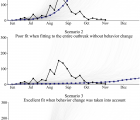
In Scenario 1 and Scenario 2, the capacity of the Lofa County ETUs was increased, as actually occurred, but no behavior change took place in the population. Scenario 1 fit the weekly case counts in June and July and extrapolated the trend to future months. Scenario 1 substantially overestimated the size of the outbreak, predicting 8585 or more reported cases by October 21 in 50% of simulations. Scenario 2 fit the weekly cases for June through October. A poor fit to the observed cases was obtained. Scenario 3 took into account gradually increasing awareness of EVD in the community, in addition to the expansion of the Lofa County ETUs, achieving an excellent fit to the observed weekly cases.

The West Africa Ebola virus epidemic now appears to be coming to an end. In the proposed model, we simulate changes in population behavior that help to explain the observed transmission dynamics. We introduce an EVD transmission model accompanied by a model of social mobilization. The model was fit to Lofa County, Liberia through October 2014, using weekly counts of new cases reported by the US CDC. In simulation studies, we analyze the dynamics of the disease transmission with and without population behavior change, given the availability of beds in Ebola treatment units (ETUs) estimated from observed data. Only the model scenario that included individuals’ behavioral change achieved a good fit to the observed case counts. Although the capacity of the Lofa County ETUs greatly increased in mid-August, our simulations show that the expansion was insufficient to alone control the outbreak. Modeling the entire outbreak without considering behavior change fit the data poorly, and extrapolating from early data without taking behavioral changes into account led to a prediction of exponential outbreak growth, contrary to the observed decline.  Education and awareness-induced behavior change in the population was instrumental in curtailing the Ebola outbreak in Lofa County and is likely playing an important role in stopping the West Africa epidemic altogether.

Assessing Measles Transmission in the United States Following a Large Outbreak in California

May 7, 2015 · Research Article

The recent increase in measles cases in California may raise questions regarding the continuing success of measles control. To determine whether the dynamics of measles is qualitatively different in comparison to previous years, we assess whether the 2014-2015 measles outbreak associated with an Anaheim theme park is consistent with subcriticality by calculating maximum-likelihood estimates for the effective reproduction number given this year’s outbreak, using the Galton-Watson branching process model. We find that the dynamics after the initial transmission event are consistent with prior transmission, but does not exclude the possibility that the effective reproduction number has increased.

Epidemiological and Surveillance Response to Ebola Virus Disease Outbreak in Lofa County, Liberia (March-September, 2014); Lessons Learned

May 6, 2015 · Research Article

Ebola Virus Disease (EVD) outbreak was confirmed in Liberia on March 31st 2014. A response comprising of diverse expertise was mobilized and deployed to the country to contain transmission of Ebola and give relief to a people already impoverished from protracted civil war. This paper describes the epidemiological and surveillance response to the EVD outbreak in Lofa County in Liberia from March to September 2014. Five of the 6 districts of Lofa were affected. The most affected districts were Voinjama/Guardu Gbondi and Foya. By 26th September, 2014, a total of 619 cases, including 19.4% probable cases, 20.3% suspected cases and 44.2% confirmed cases were recorded by the Ebola Emergency Response Team (EERT) of Lofa County. Adults (20-50 years) were the most affected. Overall fatality rate was 53.3%.  Twenty two (22) cases were reported among the Health Care Workers with a fatality rate of 81.8%. Seventy eight percent (78%) of the contacts successfully completed 21 days follow-up while 134 (6.15%) that developed signs and symptoms of EVD were referred to the ETU in Foya. The contributions of the weak health systems as well as socio-cultural factors in fueling the epidemic are highlighted. Importantly, the lessons learnt including the positive impact of multi-sectorial and multidisciplinary and coordinated response led by the government and community.  Again, given that the spread of infectious disease can be considered a security threat every effort has to put in place to strengthen the health systems in developing countries including the International Health Regulation (IHR)’s core capacities.

Key words:  Ebola virus disease, outbreak, epidemiology and surveillance, socio-cultural factors, health system, West Africa. 

2014 Ebola Outbreak: Media Events Track Changes in Observed Reproductive Number

April 28, 2015 · Discussion

In this commentary, we consider the relationship between early outbreak changes in the observed reproductive number of Ebola in West Africa and various media reported interventions and aggravating events. We find that media reports of interventions that provided education, minimized contact, or strengthened healthcare were typically followed by sustained transmission reductions in both Sierra Leone and Liberia. Meanwhile, media reports of aggravating events generally preceded temporary transmission increases in both countries. Given these preliminary findings, we conclude that media reported events could potentially be incorporated into future epidemic modeling efforts to improve mid-outbreak case projections.

Understanding the Emergence of Ebola Virus Disease in Sierra Leone: Stalking the Virus in the Threatening Wake of Emergence

April 20, 2015 · Research Article

Since Ebola Virus Disease (EVD) was first identified in 1976 in what is now the Democratic Republic of Congo, and despite the numerous outbreaks recorded to date, rarely has an epidemic origin been identified. Indeed, among the twenty-one most documented EVD outbreaks in Africa, an index case has been identified four times, and hypothesized in only two other instances. The initial steps of emergence and spread of a virus are critical in the development of a potential outbreak and need to be thoroughly dissected and understood in order to improve on preventative strategies. In the current West African outbreak of EVD, a unique index case has been identified, pinpointing the geographical origin of the epidemic in Guinea. Herein, we provide an accounting of events that serve as the footprint of EVD emergence in Sierra Leone and a road map for risk mitigation fueled by lessons learned.

Services for Mothers and Newborns During the Ebola Outbreak in Liberia: The Need for Improvement in Emergencies

April 16, 2015 · Research Article

Background:
The magnitude of the Ebola outbreak in West Africa is unprecedented. Liberia, Guinea, and Sierra Leone are in the bottom ten countries in the Human Development Index, but all had made gains in child survival prior to the outbreak. With closure of healthcare facilities and the loss of health workers secondary to the outbreak, the region risks reversing survival gains achieved in maternal and newborn health.

Methods:
Anonymized service utilization data were downloaded from the Liberia District Health Information Software (DHIS) 2 for selected maternal health services at PHC facilities in Margibi and Bong Counties from March 2014, when the first case of Ebola was reported in Liberia, through December 2014. Absolute numbers are provided instead of percentage measures because of the lack of a population-based denominator.

Results:
Overall, the data show a decrease in absolute utilization from the start of the outbreak, followed by a slow recovery after October or November. In Bong County, totals were less than 14% of the peak numbers during the outbreak for number of antenatal visits and pregnant women receiving intermittent preventive treatment for malaria in pregnancy (IPTp). For total deliveries, utilization was less than 33% of the highest month. In Margibi County, during what now appears to be the height of the outbreak, numbers dropped to less than 9% of peak utilization for antenatal care visits and 4% for IPTp. Total health facility deliveries dropped to less than 9% of peak utilization.

Conclusion:
It is clear that Bong and Margibi Counties in Liberia experienced a large drop in utilization of maternal health care services during what now appears to be the peak of the Ebola outbreak. As the health of women and their babies is being promoted in the post-2015 sustainable development agenda, it is critical that the issue of maternal and newborn survival in humanitarian emergency settings, like the Ebola outbreak, is prioritized.

Control of a Reassortant Pandemic 2009 H1N1 Influenza Virus Outbreak in an Intensive Swine Breeding Farm: Effect of Vaccination and Enhanced Farm Management Practices

April 13, 2015 · Research Article

Influenza A viruses in swine cause considerable economic losses and raise concerns about their zoonotic potential. The current paucity of thorough empirical assessments of influenza A virus infection levels in swine herds under different control interventions hinders our understanding of their effectiveness. Between 2012 and 2013, recurrent outbreaks of respiratory disease caused by a reassortant pandemic 2009 H1N1 (H1N1pdm) virus were registered in a swine breeding farm in North-East Italy, providing the opportunity to assess an outbreak response plan based on vaccination and enhanced farm management. All sows/gilts were vaccinated with a H1N1pdm-specific vaccine, biosecurity was enhanced, weaning cycles were lengthened, and cross-fostering of piglets was banned. All tested piglets had maternally-derived antibodies at 30 days of age and were detectable in 5.3% of ~90 day-old piglets. There was a significant reduction in H1N1pdm RT-PCR detections after the intervention. Although our study could not fully determine the extent to which the observed trends in seropositivity or RT-PCR positivity among piglets were due to the intervention or to the natural course of the disease in the herd, we provided suggestive evidence that the applied measures were useful in controlling the outbreak, even without an all-in/all-out system, while keeping farm productivity at full.

Public Knowledge, Perception and Source of Information on Ebola Virus Disease – Lagos, Nigeria; September, 2014

April 8, 2015 · Research Article

Background: The first ever outbreak of Ebola virus disease (EVD) in Nigeria was declared in July, 2014. Level of public knowledge, perception and adequacy of information on EVD were unknown. We assessed the public preparedness level to adopt disease preventive behavior which is premised on appropriate knowledge, perception and adequate information.

Methods: We enrolled 5,322 respondents in a community-based cross-sectional study. We used interviewer-administered questionnaire to collect data on socio-demographic characteristics, EVD–related knowledge, perception and source of information. We performed univariate and bivariate data analysis using Epi-Info software setting p-value of 0.05 as cut-off for statistical significance.

Results: Mean age of respondents was 34 years (± 11.4 years), 52.3% were males. Forty one percent possessed satisfactory general knowledge; 44% and 43.1% possessed satisfactory knowledge on mode of spread and preventive measures, respectively. Residing in EVD cases districts, male respondents and possessing at least secondary education were positively associated with satisfactory general knowledge (p-value: 0.01, 0.001 and 0.000004, respectively). Seventy one percent perceived EVD as a public health problem while 61% believed they cannot contract the disease. Sixty two percent and 64% of respondents will not shake hands and hug a successfully treated EVD patient respectively. Only 2.2% of respondents practice good hand-washing practice. Television (68.8%) and radio (55.0%) are the most common sources of information on EVD.

Conclusions: Gaps in EVD-related knowledge and perception exist. Targeted public health messages to raise knowledge level, correct misconception and discourage stigmatization should be widely disseminated, with television and radio as media of choice.

Modeling the 2014 Ebola Virus Epidemic – Agent-Based Simulations, Temporal Analysis and Future Predictions for Liberia and Sierra Leone

March 9, 2015 · Research Article

We developed an agent-based model to investigate the epidemic dynamics of Ebola virus disease (EVD) in Liberia and Sierra Leone from May 27 to December 21, 2014. The dynamics of the agent-based simulator evolve on small-world transmission networks of sizes equal to the population of each country, with adjustable densities to account for the effects of public health intervention policies and individual behavioral responses to the evolving epidemic. Based on time series of the official case counts from the World Health Organization (WHO), we provide estimates for key epidemiological variables by employing the so-called Equation-Free approach. The underlying transmission networks were characterized by rather random structures in the two countries with densities decreasing by ~19% from the early (May 27-early August) to the last period (mid October-December 21). Our estimates for the values of key epidemiological variables, such as the mean time to death, recovery and the case fatality rate, are very close to the ones reported by the WHO Ebola response team during the early period of the epidemic (until September 14) that were calculated based on clinical data. Specifically, regarding the effective reproductive number Re, our analysis suggests that until mid October, Re was above 2.3 in both countries; from mid October to December 21, Re dropped well below unity in Liberia, indicating a saturation of the epidemic, while in Sierra Leone it was around 1.9, indicating an ongoing epidemic. Accordingly, a ten-week projection from December 21 estimated that the epidemic will fade out in Liberia in early March; in contrast, our results flashed a note of caution for Sierra Leone since the cumulative number of cases could reach as high as 18,000, and the number of deaths might exceed 5,000, by early March 2015. However, by processing the reported data of the very last period (December 21, 2014-January 18, 2015), we obtained more optimistic estimates indicative of a remission of the epidemic in Sierra Leone, as reflected by the derived Re (~0.82, 95% CI: 0.81-0.83).

Hesitancy, Trust and Individualism in Vaccination Decision-Making

February 25, 2015 · Editorial

Related Articles The article is part of the PLOS Currents Outbreaks “Vaccine Hesitancy Collection“. Editorial Based on recent trends, outbreaks of measles and other vaccine-preventable diseases could be more commonplace in the coming years, even in countries where such diseases have been considered eliminated or under control. In 2014, the United States reported over 600 […]

« Newer Older »

Zika Collection

Vaccine Hesitancy Collection

PLOS Science Reddit AMA

HealthMap Zika

New Twitter

Tweets about "PLOSCurrentsOUT OR PLOS Currents Outbreaks"
  • Home
  • Terms of Use
  • Privacy Statement
  • About
  • Contact